How Technology Is Revolutionizing Modular Furniture Manufacturing in India
The modular furniture industry has undergone a remarkable transformation over the last decade, driven largely by advancements in digital tools, precision engineering, and automated production systems. Today, every modern Modular Furniture Factory is evolving into a high tech ecosystem where innovation plays a central role in improving efficiency, accuracy, design quality, and customer experience. As clients demand greater customization, shorter delivery timelines, and international grade finishes, technology has become the backbone of how leading modular furniture manufacturers in India/Maharashtra operate. This shift is not only reshaping manufacturing processes but also redefining what businesses and homeowners can expect from modular furniture.
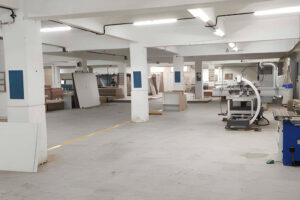
One of the most significant technological developments in the industry is the adoption of CNC machining and automated cutting systems. Unlike traditional carpentry that depends heavily on manual skill, CNC based production ensures precision down to the millimetre. This accuracy helps reduce material wastage, maintain consistent quality across large volumes, and streamline the entire manufacturing workflow. Within a modern Modular Furniture Factory, CNC machines handle cutting, routing, and shaping of panels with speed and flawless repeatability. For manufacturers operating at scale, this technology enables faster turnaround and error free results, which ultimately benefit clients looking for reliable and long lasting furniture solutions.
Digital design tools have also revolutionised the initial planning phase. Earlier, customers had to rely on sketches and imagination to visualise their furniture layouts. Today, leading modular furniture manufacturers in India/Maharashtra offer 2D plans, 3D models, and photorealistic renders that allow clients to preview their entire space before production even begins. These tools help homeowners, architects, and corporate clients make confident decisions regarding finishes, dimensions, materials, colours, and placement. With advanced design software, designers can experiment with multiple layout options and predict potential functional issues well in advance. This improves customer satisfaction and reduces design errors, keeping the production process streamlined.
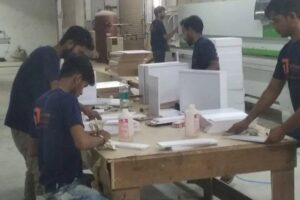
Automation inside the Modular Furniture Factory has gone far beyond cutting and shaping. Automated edge banding machines ensure seamless and durable finishes, robotic arms assist in material handling, and digital assembly lines help maintain consistent workmanship. Precision edge banding is particularly important because it affects both durability and appearance. Poor edge finishes often lead to peeling, moisture absorption, and reduced lifespan, but modern automated edge banding systems used by modular furniture manufacturers in India/Maharashtra achieve high bonding accuracy and smoother aesthetics. The use of UV cured coatings and heat resistant laminates further contributes to long term performance.
Material innovation has also progressed significantly. Engineered boards are now designed to resist moisture, bending, termites, and fluctuations in temperature. Manufacturers use high density boards, calibrated plywood, and premium laminates to offer improved structural stability. These advanced raw materials, combined with precision engineering, ensure that furniture stands up to daily wear and tear. Many leading modular furniture manufacturers in India/Maharashtra invest in quality testing labs where products undergo strict checks for load bearing capacity, durability, and finish consistency. This level of quality assurance was nearly impossible before the integration of modern technology and automated workflows.
Smart production management systems are another technological leap. A modern Modular Furniture Factory uses barcode scanning, inventory automation, digital order tracking, and workflow monitoring to optimise operations. These systems reduce human error, minimise delays, and keep every department aligned from design and cutting to assembly and dispatch. Real time tracking allows project managers to monitor progress and quickly address bottlenecks. This ensures that large commercial orders, boutique hotel projects, residential interior packages, and office fit outs are delivered on time and according to exact specifications.
Technology has also reshaped the after sales and installation phase. Earlier, installation was labour intensive and time consuming, often depending solely on manual interpretation of drawings. Now, installation teams use laser level tools, digital layout references, and modular assembly instructions that ensure faster and more accurate onsite execution. The precision achieved in the Modular Furniture Factory directly translates to efficient installation, reducing downtime for offices and homeowners. Many modular furniture manufacturers in India/Maharashtra also use software to manage after sales service requests, maintenance needs, and part replacements, making the customer experience smoother and more professional.
Sustainability is another area where technology is making a meaningful impact. With increasing environmental awareness, manufacturers are shifting toward eco certified materials, low VOC adhesives, water based finishes, and energy efficient machinery. Dust extraction systems, recycling units, and waste minimisation technologies are becoming standard across modern production facilities. These enhancements not only reduce environmental impact but also make products safer and healthier for clients. The integration of sustainable techniques reflects the new direction taken by forward thinking modular furniture manufacturers in India/Maharashtra, who aim to deliver responsible luxury without compromising quality.
Technology has also enabled higher levels of customisation. Earlier, customised furniture meant longer lead times and inconsistent quality. Today, with digital templates, automated workflows, and engineered components, customised designs can be produced at scale while maintaining precision. Clients can choose dimensions, layouts, colours, hardware, and finishes that match their interiors perfectly. This flexibility sets modular furniture apart from traditional carpenter made solutions and is a major reason why demand for modular systems continues to rise across India.
The shift toward technology driven manufacturing has elevated the reputation of India’s modular furniture industry on a global scale. A well equipped Modular Furniture Factory can now match international standards in design sophistication, structural strength, and finishing quality. This progress has helped Indian manufacturers expand into export markets, hospitality chains, real estate projects, and premium commercial interiors. The competitive advantage lies in delivering fast, reliable, and beautifully engineered furniture without the inconsistencies found in conventional methods.
As digital innovation continues to evolve, the future of modular furniture looks even more promising. Manufacturers who embrace automation, design technology, and sustainable processes will continue leading the market and delivering high performing solutions for homes, offices, hotels, retail spaces, and large commercial environments. With the combined power of engineering and creativity, the next generation of modular furniture manufacturers in India/Maharashtra will redefine the way people experience interior spaces.